Your cart is currently empty


 India
India USA ($)
“Where Women Learn, Grow, and Shine”
Through Tripura Foundation India, a Free Women’s Tailoring Training Program was launched in March 2021 with the vision of empowering women through skill development and sustainable livelihood opportunities. The program focuses on providing practical training in stitching garments for women and children, enabling participants to build a reliable source of income.Each training batch runs for a three-month duration, combining both theoretical guidance and hands-on practice. So far, 17 batches have been successfully completed, and more than 350 women have benefited from this initiative. Many of theparticipants come from rural backgrounds, including widows, single mothers, and economically disadvantaged young women,who are eager to learn skills that can improve their family’s financial stability. After completing the training, several women have started home-based tailoring businesses, stitching clothes for people in their villages and earning around ₹300 per day.Some trainees have also secured employment in garment factories and local tailoring shops, while others assist experienced tailors in their communities, gaining further experience and income.
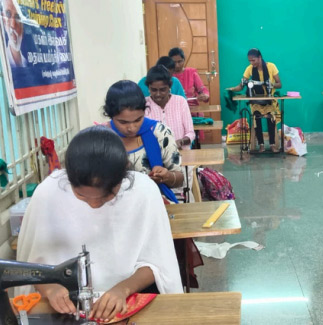 Continuing this effort, the 18th batch of the Free Women’s Tailoring Training Program began in January 2026 with 10 enthusiastic students. The training is conducted at the foundation’s center, which is equipped with 15 tailoring machines to ensure that every student receives sufficient practical exposure.Classes are held in the morning shift from 10:00 AM to 2:00 PM, providing astructured and comfortable learning environment. The course is conducted inbatches, with each batch receiving a three-month training program designed togradually develop the students’ skills, beginning with basic sewing techniquesand progressing toward advanced garment construction.
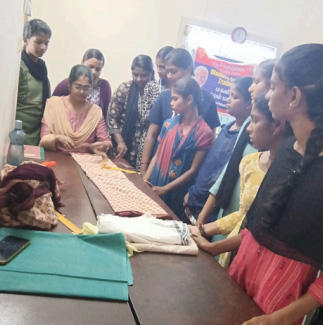 In First month , the trainees learned foundational skills by stitching handkerchiefs, pillow covers (normal, frill, and circle types), and in-skirts (8-part, 4-part, and patti styles), helping them understand measurements, cutting,and stitching methods. In Second month, they advanced to intermediate garments such as petticoats, frocks, and pattu pavadai sets, gaining confidence in garment design and finishing. During Third month the last month of thetraining, the training focuses on more advanced pieces including normal andlining chudidars with two neck designs, designer blouses, and normal blouses with three neck designs, enabling students to handle more detailed and professional tailoring work.
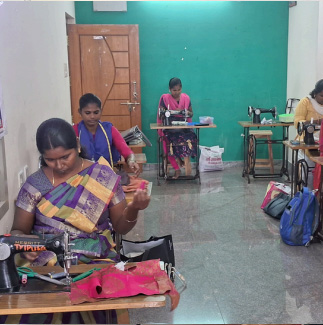 The training sessions follow a “chalk-and-talk” teaching method, which allows instructors to clearly explain measurements, cutting techniques, and stitching patterns before students practice them on machines. This method makes learning simple, structured, and easy for beginners. The program also encourages discipline, creativity, and confidence, helping women believe in their abilities to start independent work in the future. From Third month, the students began preparing an album documenting all the garments and samples they completed during the course, which helps them track their progress and also serves as a portfolio when they seek tailoring jobs. The album submission deadline is Middle of the last month training, after which the remaining chudidar and blouse training sessions will be completed. By the end of the program, the trainees will have practical experience in stitching multiple types of garments and understanding customer needs.
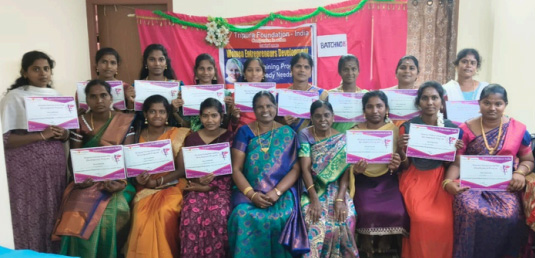
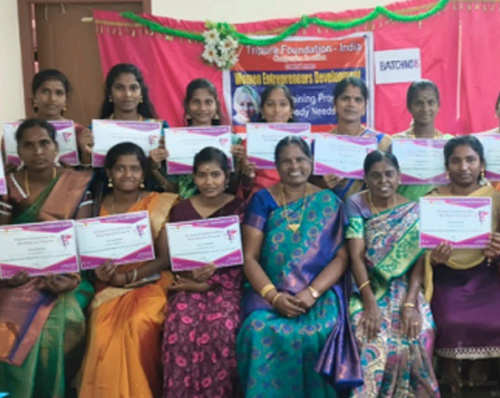
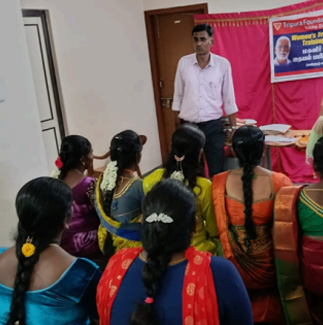 The course will conclude at the end of Third Month and a certificatedistribution ceremony is planned for Last day of the third month torecognize the dedication and achievements of the students who successfullycomplete the training. The certificates not only acknowledge their hardwork but also help them build credibility when seeking employment orstarting their own tailoring services. Through this meaningful initiative,Tripura Foundation continues to empower women with vocational skills,promote self-confidence, and create sustainable livelihood opportunities,enabling them to support themselves and their families while contributingpositively to their communities.